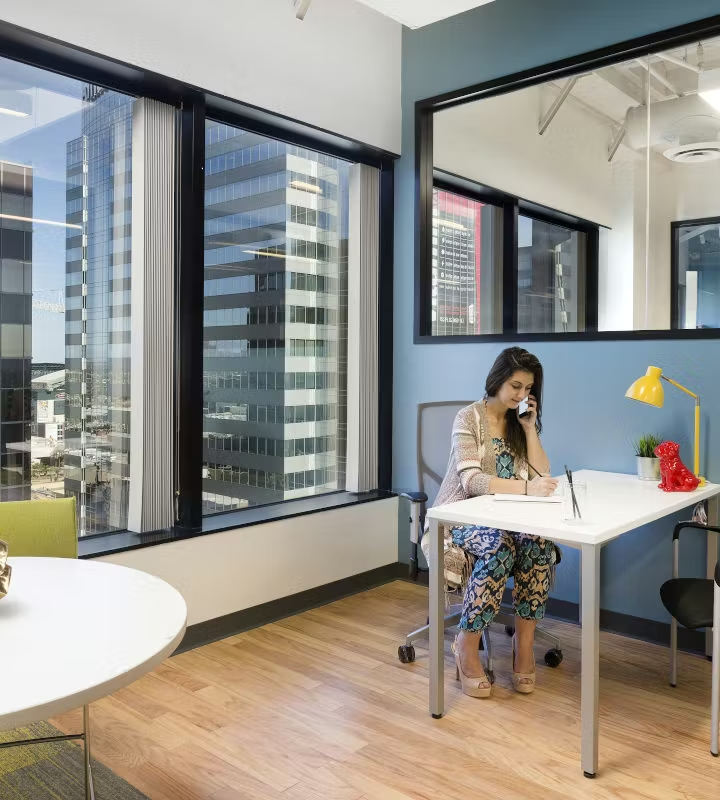
Most professionals still evaluate co-working spaces against a standard that was obsolete before 2020. The infrastructure has changed substantially. The perception has not.
There is a persistent image that surfaces whenever co-working enters the conversation: communal tables without partitions, bean bags in lieu of ergonomic seating, and the ambient noise of a dozen simultaneous phone calls. It was, for a brief period, an accurate description. It was also, more importantly, effective marketing.
That image belongs to 2015. The problem is that professional discourse has not caught up with the decade of iteration that followed.
The relevant question has never been whether co-working spaces are noisy. The question is whether the space provides what a given team genuinely requires.
What the modern co-working environment actually provides
The co-working sector has undergone substantial professionalization since its WeWork-era origins. Operators competing for enterprise clients and distributed teams have systematically addressed the functional failures of first-generation spaces. What exists today is categorically different from what existed at the peak of the open-plan, ping-pong-table aesthetic.
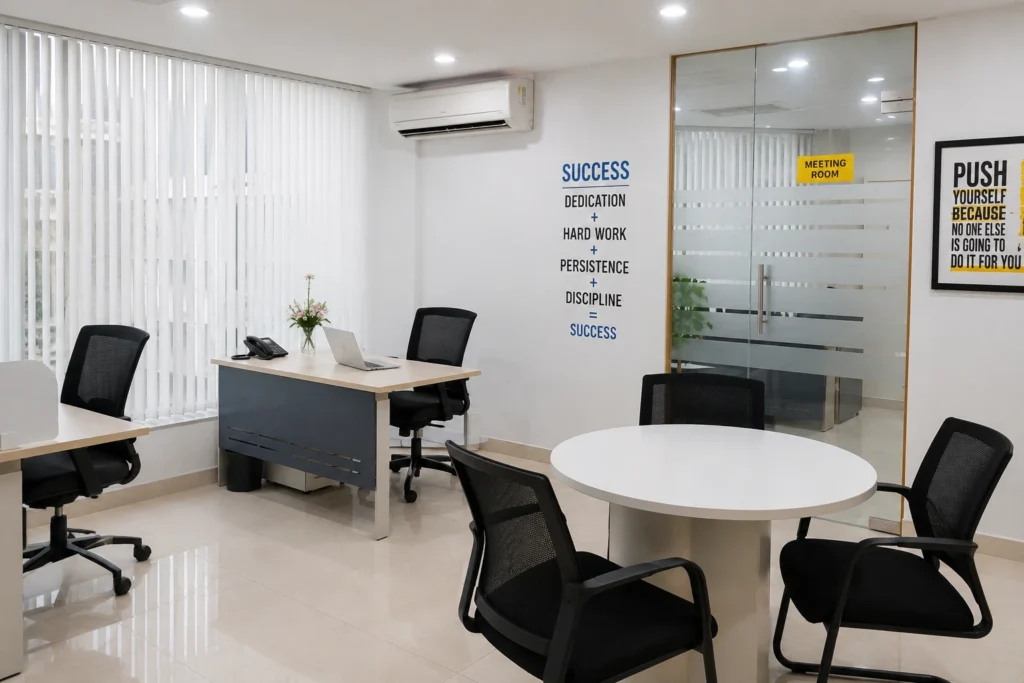
A well-designed co-working environment in 2025 is zoned deliberately, with each area engineered for a specific mode of work:
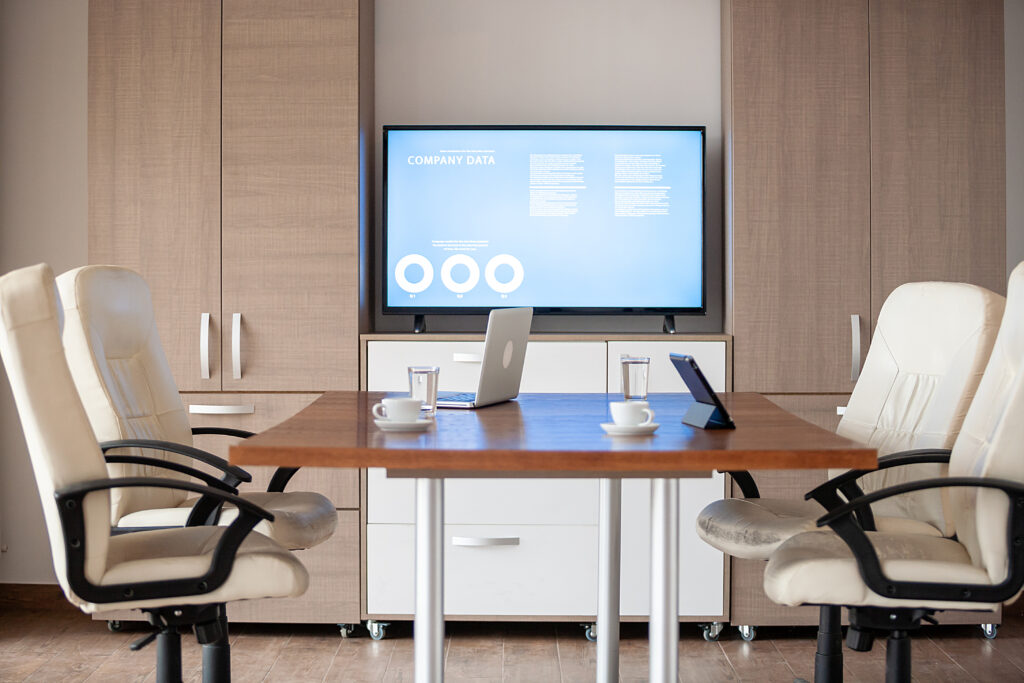
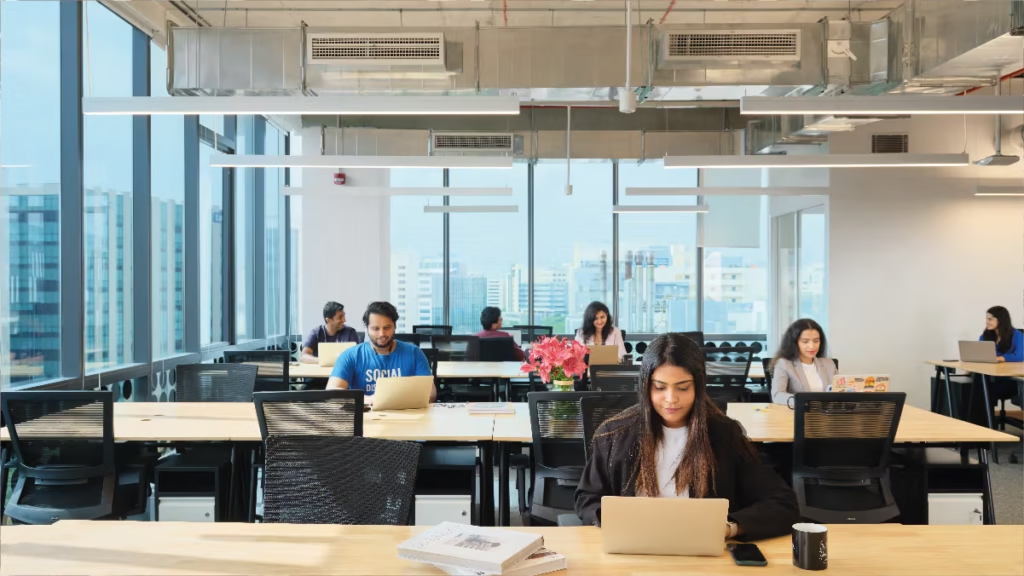
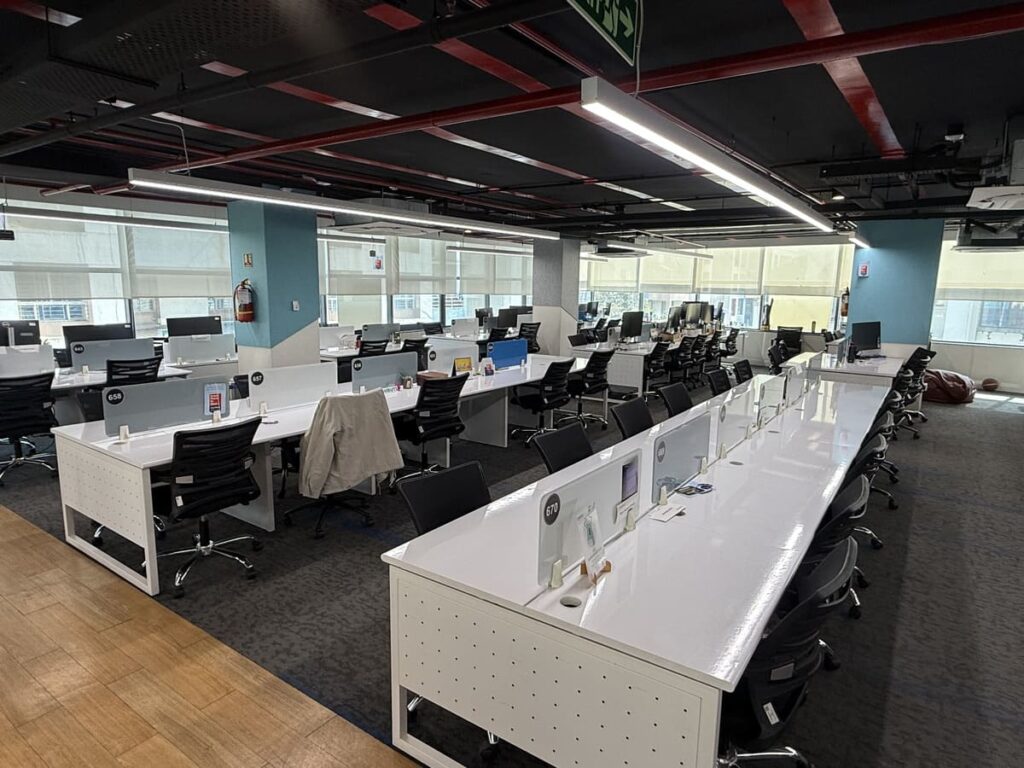
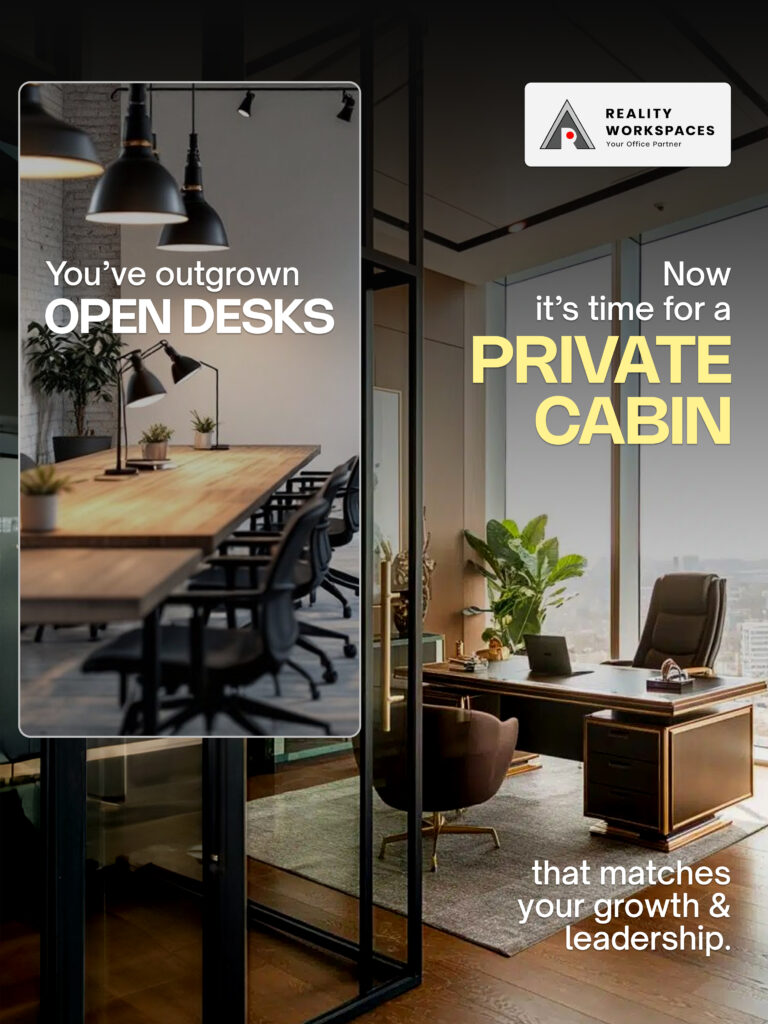
01 Acoustic-grade private cabins: Soundproofed enclosures designed for focused individual work, confidential client calls, and video conferencing without environmental interference.02 Bookable conference rooms with professional AV: Fully equipped meeting rooms with enterprise-grade audio-visual infrastructure, bookable by the hour and available without the overhead of maintaining them in-house.03 Enforced quiet zones: Designated areas where noise standards are maintained as a community norm, not a guideline, but an expectation with social accountability behind it.04 Flexible hot desks for ambient working: Open seating is retained for professionals who perform well in a lightly stimulating shared environment, a legitimate work preference, not the default condition.
05 Dedicated team spaces: Reserved areas that allow distributed or hybrid teams to maintain a consistent physical presence and cultivate their own working culture within a shared facility.The cost of an outdated assumption
The most consequential dimension of this misconception is not aesthetic , it is financial. Organizations continuing to lease dedicated office space on the premise that co-working is unsuitable for serious work are, in many cases, paying a substantial premium to avoid a problem that no longer exists.
For teams requiring flexible real estate, a professionally managed co-working environment frequently offers comparable infrastructure to a leased floor, with significantly lower fixed costs and greater adaptability to changes in headcount or working patterns.
The 2015 meme was a product of a specific moment in workplace culture. It served its purpose. The spaces it described no longer represent the sector. Decisions made on the basis of that image, whether to engage with co-working as a viable option deserve to be revisited with current evidence.